


Heart Disease in women
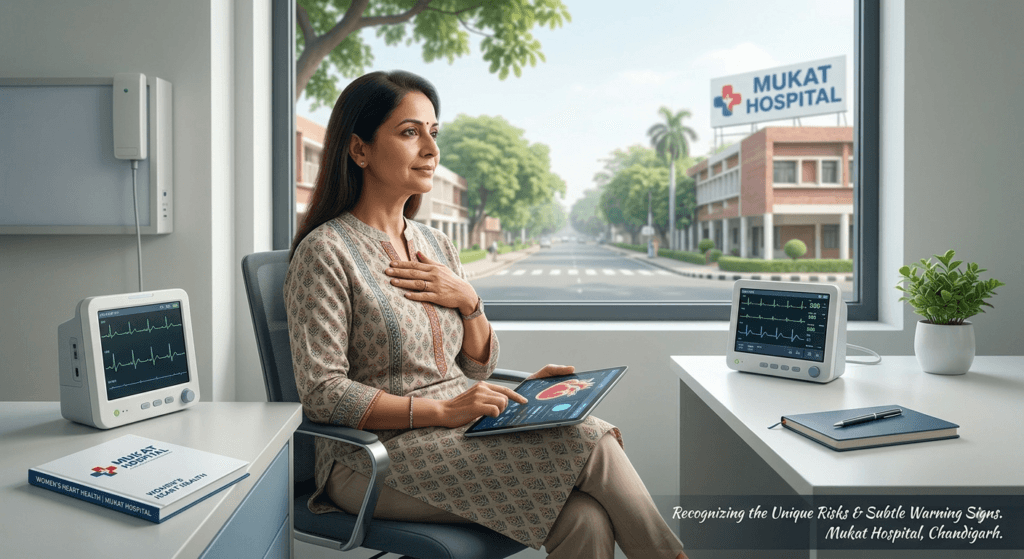
Heart Disease in Women: Recognizing the Unique Risks & Subtle Warning Signs When most people picture a heart attack, they imagine a sudden, crushing chest pain that knocks someone off their feet. However, medical research—and daily clinical experience—tells a very different story when it comes to women. Heart disease is the leading cause of death among women globally, yet women are significantly more likely than men to misinterpret their symptoms or delay seeking emergency medical care. At Mukat Hospital, Chandigarh, our Department of Cardiac Sciences sees many female patients who brushed off early warning signs as mere fatigue, acidity, or stress. Increasing awareness around women’s heart health can save lives. Here is what every woman—and her family—in the Tricity region (Chandigarh, Mohali, Panchkula) should know. Why Heart Disease Manifests Differently in Women Men and women have distinct cardiovascular systems and hormonal profiles. While men typically experience major arterial blockages in large coronary blood vessels, women are more prone to Coronary Microvascular Disease (CMD)—a condition affecting the heart’s tiny blood vessels. This key difference often results in symptoms that do not fit the classic “movie-style” heart attack profile, making diagnosis more complex without specialized cardiac screening. Take charge of your health. Book your heart health check-up at a trusted hospital in Chandigarh today. Call Now +91 9023884444 Customer Health Location locationCreated with Sketch Beta. Facebook Twitter Youtube Linkedin Instagram Classic vs. Subtle: Symptoms of Heart Attack in Females While chest discomfort remains a common indicator, women frequently experience atypical or subtle warning signs—often without severe chest pain. Uncommon & Subtle Symptoms to Watch Out For: Unusual or Extreme Fatigue: Feeling completely exhausted after routine daily activities, lasting for days or weeks. Shortness of Breath: Difficulty breathing while resting or during light physical activity, with or without chest tightness. Referred Pain: Pain, aching, or tightness spreading to the neck, jaw, throat, upper back, shoulders, or arms. Upper Abdominal Discomfort: Indigestion-like burning, nausea, vomiting, or stomach pressure (frequently mistaken for acidity/GERD). Cold Sweats & Lightheadedness: Sudden unexplained sweating, dizziness, or feeling faint. Sleep Disturbances & Anxiety: Unexplained restlessness, difficulty sleeping, or a sudden sense of impending doom. Crucial Tip: In women, heart symptoms can manifest while resting or sleeping, and are often triggered by emotional stress rather than physical exertion. If something feels “off,” do not hesitate to seek immediate medical assistance. Actionable Steps to Protect Your Heart: Women share standard risk factors with men—such as high blood pressure, high cholesterol, obesity, and smoking. However, certain conditions significantly elevate heart risk specifically in women: 1. Hormonal Changes & Menopause Estrogen provides a natural protective effect on blood vessel walls. As estrogen levels drop during and after menopause, the risk of developing coronary artery disease rises sharply. 2. Pregnancy Complications A history of preeclampsia (high blood pressure during pregnancy), gestational diabetes, or premature delivery increases a woman’s long-term risk of heart disease later in life. 3. Autoimmune Disorders Conditions like lupus and rheumatoid arthritis affect women far more frequently than men and cause chronic systemic inflammation, accelerating plaque buildup in the arteries. 4. Diabetes and Stress Diabetes increases the risk of heart disease more significantly in women than in men. Additionally, emotional stress, depression, and high anxiety levels have a stronger physiological impact on a woman’s cardiovascular system. Wondering about your risks? Schedule a personalized consultation at a leading brain tumor hospital in Chandigarh. Diagnostic Challenges: Why Early Screening Matters Because female symptoms are subtle and microvascular disease does not always show up on standard tests, specialized cardiac evaluation is essential. At Mukat Hospital, Chandigarh, our advanced cardiology clinic utilizes comprehensive diagnostic tools tailored for women’s heart care: Electrocardiogram (ECG) & Echocardiogram (ECHO): To monitor heart rhythm and structure. Treadmill Stress Testing (TMT): To assess how the heart performs under physical effort. High-Sensitivity Cardiac Blood Tests: Checking for specific biomarkers, lipid levels, and blood sugar control. Coronary Angiography & CT Angiogram: Providing detailed visual imaging of coronary arteries. Explore treatment options with confidence. Connect with the care team at Mukat Hospital, Chandigarh today. Unique Risk Factors for Women’s Heart Health: Prevention is the most effective approach to cardiovascular health. Women of all ages can take immediate steps to reduce their risk: Know Your Numbers: Monitor your blood pressure, blood sugar, lipid panel, and BMI regularly—especially after age 35 or post-menopause. Adopt a Heart-Healthy Diet: Focus on whole grains, leafy greens, lean proteins, nuts, and healthy fats while reducing sodium, refined sugars, and trans fats. Stay Active: Aim for at least 150 minutes of moderate aerobic exercise (like brisk walking, cycling, or swimming) per week. Manage Stress: Practice mindfulness, yoga, or deep breathing to mitigate the cardiovascular impact of chronic mental stress. Schedule Annual Cardiac Screenings: Routine preventive heart checkups can catch subtle warning signs before they escalate into emergencies. Take Control of Your Brain Health Today Take the first step toward a healthier life. Book an Appointment Today: Call us at 9023-88-4444 or visit the Mukat Hospital to schedule your consultation.
Brain Tumor Awareness: Symptoms and Treatment
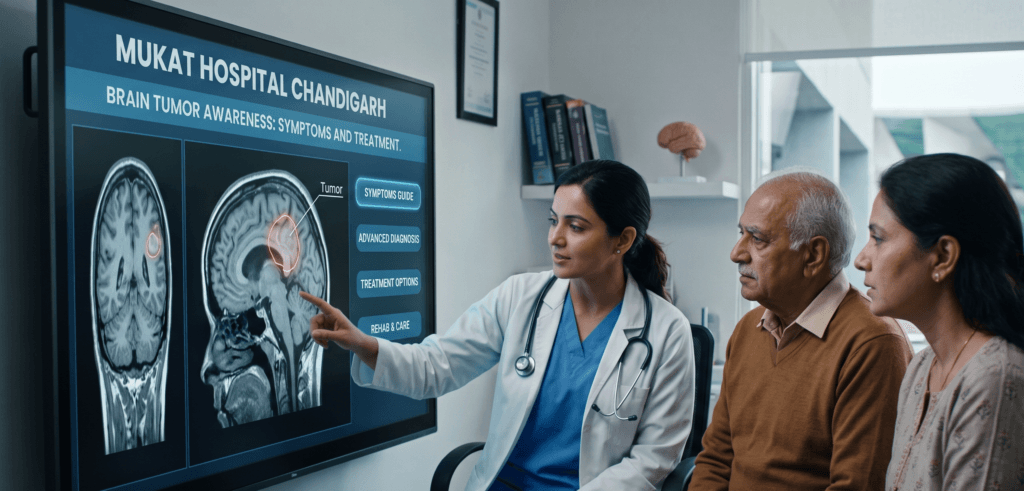
Brain Tumor Awareness: Symptoms and Treatment You probably don’t spend much time thinking about brain tumors—until one day, something shifts. Maybe a headache sticks around, or a family member suddenly has trouble remembering words. Suddenly, “brain tumor awareness” isn’t just a headline. It’s your reality. If you’ve landed here with questions, you’re not alone. At Mukat Hospital, Chandigarh, recognized as a premier multispecialty hospital in the region, we guide individuals and families through every step of their journey—from diagnosis to recovery. Whether you’re worried about symptoms or planning for brain tumor treatment in Chandigarh, having the right information and support can make all the difference. Take charge of your health. Book your neuro check-up at a trusted hospital in Chandigarh today. Call Now +91 9023884444 Common Symptoms of a Brain Tumor Not all headaches are cause for alarm—but some symptoms may point to something more serious. Keep an eye out for: Persistent morning headaches Sudden seizures without a prior history Visual disturbances (like blurred or double vision) Slurred speech Numbness or weakness, often on one side of the body Memory or mood changes These signs can vary heavily based on the tumor’s location and type. At Mukat Hospital in Chandigarh, our neurology specialists are trained to interpret subtle clues that many might overlook. Identifying brain tumor symptoms early can be the key to timely, effective brain tumor treatment in Chandigarh. Meet Our Expert Neuro Specialists Causes and Risk Factors Brain tumor causes range from genetic mutations and inherited syndromes to prior radiation exposure. In many cases, however, the exact cause remains unclear. Individuals with a family history or compromised immunity may be at a higher risk. At Mukat Hospital, Chandigarh, our neuro-oncology team provides expert risk assessment, screening, and counseling—empowering you with the knowledge to act early. Wondering about your risks? Schedule a personalized consultation at a leading brain tumor hospital in Chandigarh. Brain Tumor Treatment Options Every brain tumor is different, and so is the treatment plan. At Mukat Hospital, Chandigarh, we offer a comprehensive range of therapies customized to your needs, including: Brain tumor surgery in Chandigarh using advanced neuronavigation Stereotactic radiosurgery Chemotherapy and targeted drugs Rehabilitation for optimal post-surgical recovery Cost is often a significant concern for families navigating a diagnosis. Our team helps patients understand brain tumor surgery costs in Chandigarh and works toward affordable, evidence-based care. This holistic approach is what sets us apart as a top choice for brain tumor care—providing both clinical excellence and compassionate support. Conclusion From subtle symptoms to life-changing diagnoses, Mukat Hospital, Chandigarh stands by patients with clarity, compassion, and cutting-edge care. As a leading neurological hospital in the region, we specialize in everything from early diagnosis and advanced surgery to long-term rehabilitation. Whether you’re searching for brain tumor treatment in Chandigarh for yourself or evaluating options for a loved one, know that the right support and timely care can shift outcomes dramatically. Your journey doesn’t start with surgery—it starts with awareness. Explore treatment options with confidence. Connect with the care team at Mukat Hospital, Chandigarh today. Take Control of Your Brain Health Today Take the first step toward a healthier life. Book an Appointment Today: Call us at 9023-88-4444 or visit the Mukat Hospital website to schedule your consultation. Customer Health Location locationCreated with Sketch Beta. Facebook Twitter Youtube Linkedin Instagram
Don’t Just Manage Symptoms: How Modern Pulmonology Restores Your Lung Health and Sleep Quality
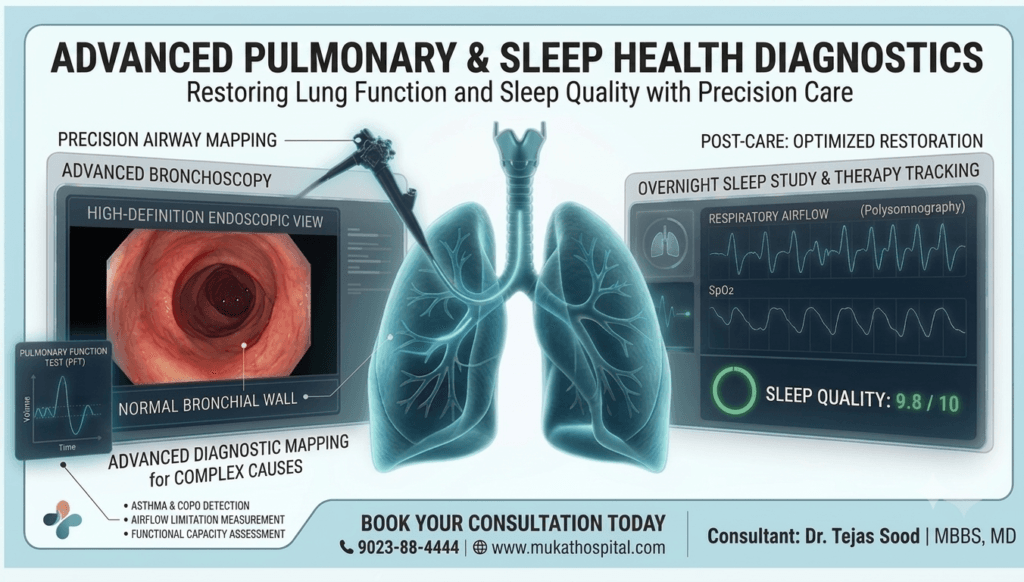
Don’t Just Manage Symptoms: How Modern Pulmonology Restores Your Lung Health and Sleep Quality When we think…
The Future of Cardiac Care: Sutureless Heart Surgery vs. Traditional Open Heart Surgery
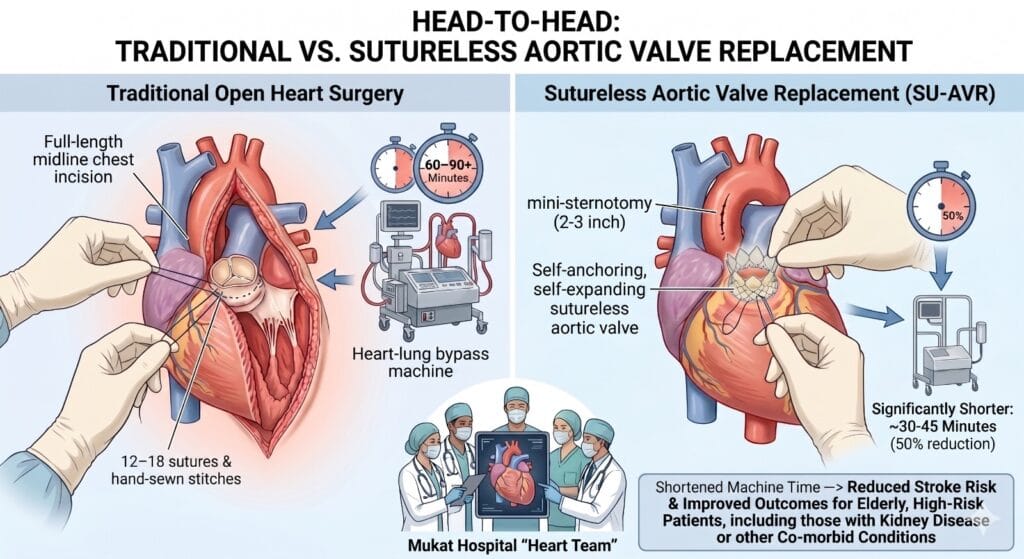
The Future of Cardiac Care: Sutureless Heart Surgery vs. Traditional Open Heart Surgery What is Traditional Open Heart Surgery? In a traditional aortic valve replacement (AVR), the cardiac surgeon makes an incision down the chest, carefully separates the breastbone to access the heart, and connects the patient to a heart-lung bypass machine. Once the damaged natural valve is removed, the surgeon must meticulously hand-sew the new artificial valve into place using tiny stitches called sutures. A standard valve replacement typically requires 12 to 18 individual sutures, a precise process that takes significant time while the heart is stopped. What is Sutureless Heart Surgery? Sutureless heart surgery utilizes a highly advanced, self-expanding or anchoring artificial valve. Instead of manually stitching the new valve into place, the surgeon removes the diseased valve and positions the new sutureless valve inside the heart. Once deployed, the valve expands and anchors itself securely against the tissue under natural pressure. The surgeon may use just one or two securing stitches for absolute stability, but the process completely eliminates the need for dozens of time-consuming hand-sewn knots. Head-to-Head: How They Compare Feature Traditional Open Heart Surgery Sutureless Heart Surgery Fixation Method 12–18 hand-sewn stitches (sutures) Self-anchoring, expanding framework Time on Bypass Machine Longer (typically 60–90+ minutes) Significantly shorter (often reduced by less time, 50%) Incision Options Requires a full midline chest incision Can be done via a tiny, minimally invasive incision (mini-sternotomy) Recovery Time 6 to 8 weeks for complete healing 2 to 4 weeks with less post-op discomfort Ideal For Standard patients with no complex anatomy, younger age group High-risk, elderly, or multi-procedure patients The Big Win: Why “Less Time on the Machine” Matters The single greatest advantage of sutureless heart surgery comes down to a clock. During a valve replacement, the patient relies on a heart-lung bypass machine while the heart is temporarily stopped (called cross-clamp time). Because a sutureless valve can be anchored in just a few minutes rather than hand-stitched over half an hour, the overall time the patient spends on the bypass machine is significantly less. For elderly patients, or those with other health conditions like kidney disease (creatinine) or any other co-morbid condition, minimizing bypass time drastically reduces the risk of post-operative complications, stroke, and inflammation, and other complications. Key Benefits of the Sutureless Approach: Minimally Invasive: Because the valve is easier to position, surgeons can often place it through a tiny 2-to-3 inch incision between the ribs, leaving the breastbone completely intact. Rapid Recovery: Less time in the operating room means less time in the ICU, fewer days in the hospital, and a much quicker return to daily life in Chandigarh. Excellent Fluid Dynamics: Sutureless valves do not have a bulky sewing ring, allowing for better blood flow through the newly installed valve. Which Option is Right for You? While sutureless surgery sounds like the obvious choice, it is not a one-size-fits-all solution. Traditional open-heart surgery remains vital for patients with highly complex heart anatomy or those needing multiple complex repairs at once. At Mukat Hospital, our multidisciplinary “Heart Team” evaluates every patient individually. Factors such as age, overall physical fitness, anatomical variations, including different valve anatomies, help us determine which pathway offers the safest, most successful outcome. Considering Cardiac Care? If you or a loved one have been advised to undergo valve surgery, get an expert opinion from the leading cardiac specialists in the Tricity. Sutureless vs Open Heart Surgery Location: Mukat Hospital, Sector 34-A, Chandigarh. 24/7 Emergency & Consultations: +91 90238-84444 Customer Health Location locationCreated with Sketch Beta. Facebook Twitter Youtube Linkedin Instagram
Beat the Heat: A Comprehensive Guide to Heart & Summer Safety in the Tricity
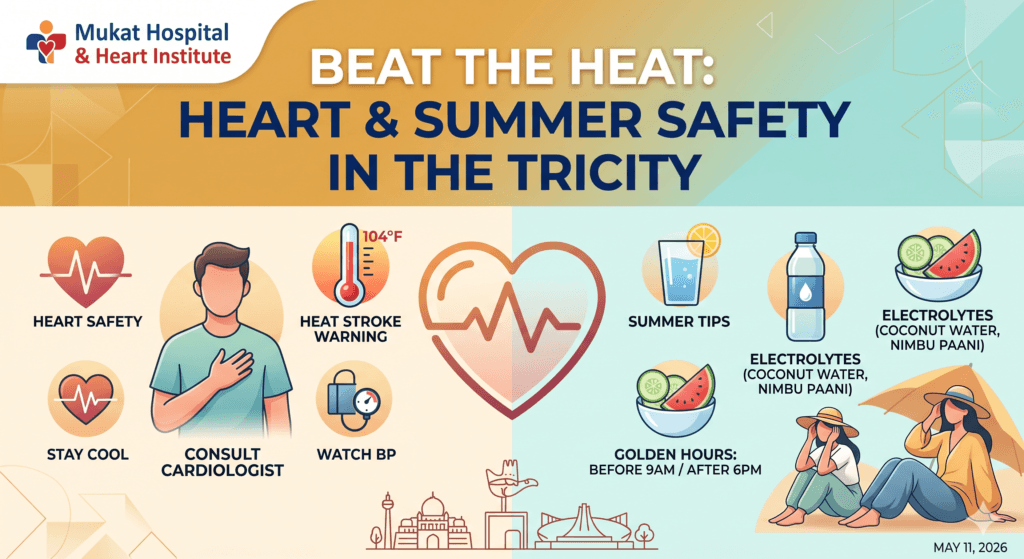
Considering the current date (May 2026) and the typical health concerns for the Chandigarh/Tricity area this time of year, here is a comprehensive blog post drafted for the Mukat Hospital & Heart Institute website. Beat the Heat: A Comprehensive Guide to Heart & Summer Safety in the Tricity As temperatures in Chandigarh and the surrounding areas begin to soar, the heat is more than just a matter of discomfort—it’s a matter of health. For the residents of our beautiful Tricity, staying cool is essential, especially for those managing chronic conditions like hypertension or heart disease. At Mukat Hospital & Heart Institute, we believe that prevention is the first step toward a healthy life. Here is everything you need to know about staying safe during a North Indian summer. Why the Heat is Hard on Your Heart When it’s hot, your heart has to work harder. To cool you down, your body shunts more blood to your skin, which requires your heart to beat faster and pump harder. For individuals with existing cardiac conditions, this extra “overtime” can lead to strain. Watch for these signs: Increased palpitations, shortness of breath, or unusual fatigue during light activity. The Mukat Tip: If you are on blood pressure medication or diuretics, consult your cardiologist. Heat can cause blood pressure to dip, and your dosage may need a seasonal adjustment. Hydration: Beyond Just Water In the dry heat of Chandigarh, you lose fluids through perspiration often without realizing it. Thirst is actually a late sign of dehydration. The 2-Liter Rule: Aim for at least 2-3 liters of water daily. Natural Electrolytes: Include coconut water, buttermilk (lassi), and lemon water (nimbu paani) with a pinch of salt to replace lost minerals. Avoid: Excessive caffeine and sugary sodas, as they can actually increase fluid loss. 3. Recognizing Heat Exhaustion vs. Heat Stroke It is vital to know when a “bad headache” is actually a medical emergency. Symptom Symptom Heat Exhaustion Heat Stroke (Emergency!) Symptom Heat Exhaustion Heat Stroke (Emergency!) Skin Skin Pale, cool, and clammy Hot, red, and dry (no sweat) Skin Pale, cool, and clammy Hot, red, and dry (no sweat) Pulse Fast and weak Rapid and strong Mental State Dizziness or fainting Confusion, slurred speech, or seizures Temperature Temperature Normal or slightly elevated Above 104°F (40°C) If you suspect Heat Stroke, call our 24/7 Emergency Line immediately. 4. Lifestyle Tweaks for Tricity Residents The Golden Hours: Limit outdoor activities (walking, errands, or gardening) to before 9:00 AM or after 6:00 PM. Dress for the Climate: Opt for loose-fitting, light-colored cotton fabrics that allow your skin to breathe. Summer Diet: Switch to “water-heavy” foods. Watermelon, cucumbers, and curd should be staples in your kitchen this month. 5. A Note for Our Seniors Our elderly population is more susceptible to heat-related illnesses as the body’s ability to regulate temperature decreases with age. We encourage family members to check on seniors at least twice a day during peak heatwaves. Comprehensive Care at Mukat Hospital Whether it’s a routine cardiac check-up or an emergency consultation, Mukat Hospital is equipped with state-of-the-art diagnostic tools and a team of seasoned specialists ready to assist you. Specialties Available: Cardiology, Internal Medicine, Orthopedics, Nephrology, and more. Location: Sector 34-A, Chandigarh. Emergency Contact: +91 9023884444 Stay Cool. Stay Hydrated. Stay Healthy. Customer Health Location locationCreated with Sketch Beta. Facebook Twitter Youtube Linkedin Instagram
Air Quality and Your Lungs
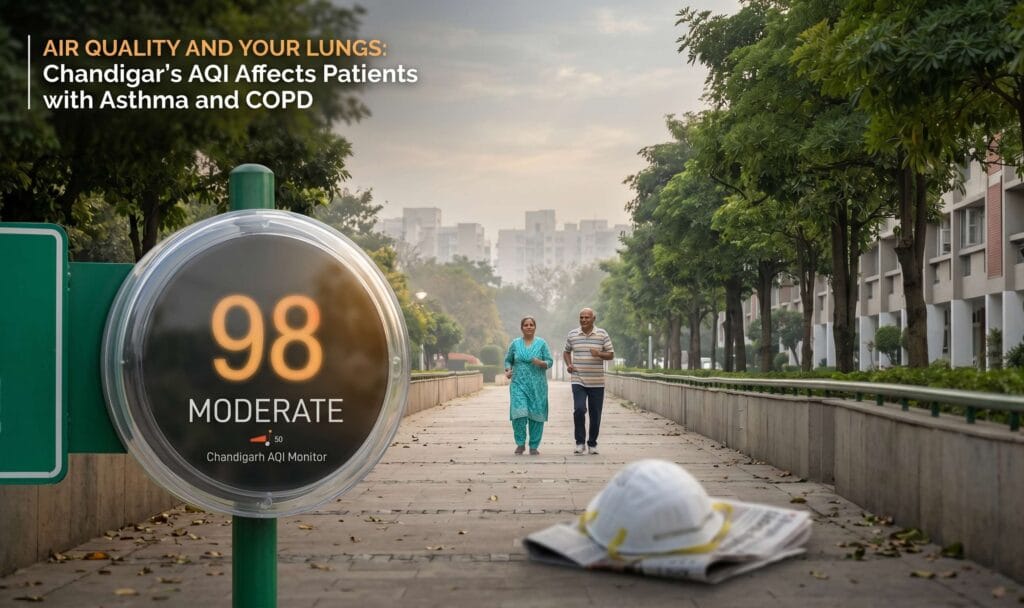
Air Quality and Your Lungs: How Chandigarh’s AQI Affects Patients with Asthma and COPD Chandigarh is often celebrated as “The City Beautiful” for its greenery and planned architecture. However, beneath its manicured exterior, the city faces a recurring challenge: fluctuating Air Quality Index (AQI). For most residents, a “Moderate” AQI day is just a hazy afternoon; but for those living with Asthma or COPD (Chronic Obstructive Pulmonary Disease), it can be a matter of medical emergency As of late April 2026, Chandigarh’s AQI has been hovering in the “Moderate” (51-100) range, with particulate matter (PM2.5 and PM10) remaining the primary pollutants. While this is an improvement over the “Severe” levels seen in winter, it still poses a significant risk to sensitive groups. Understanding the Chandigarh Context: Why AQI Matters The AQI is a yardstick that runs from 0 to 500. The higher the value, the greater the level of air pollution and the greater the health concern. In Chandigarh, the air quality is heavily influenced by: Seasonal Crop Residue Burning: Neighboring states often contribute to a spike in pollutants. Vehicular Emissions: Despite the greenery, the high density of vehicles in sectors like 17, 22, and 35 adds to the NO2 levels. Construction Dust: Ongoing infrastructure projects in the Tricity area (Chandigarh, Mohali, Panchkula) keep PM10 levels elevated. How Pollutants Attack Your Lungs For patients with chronic respiratory conditions, air pollutants act as “triggers” that cause the airways to tighten and inflame. 1.Particulate Matter (PM2.5 & PM10) These are tiny particles—some 30 times thinner than a human hair. Because they are so small, they bypass the nose and throat, traveling deep into the lungs and even entering the bloodstream. Impact: Triggers asthma attacks, causes wheezing, and reduces lung function in COPD patients 2. Nitrogen Dioxide (NO2) & Ozone (O3) Common in urban Chandigarh due to traffic, these gases irritate the lining of the airways. Impact: Increases the risk of respiratory infections and makes the lungs more sensitive to allergens like pollen. Action Plan: Protecting Your Health in Chandigarh If you or a loved one is managing Asthma or COPD, follow these localized steps to stay safe: Check Daily AQI Levels Don’t wait until you feel breathless. Use real-time monitoring tools to check the AQI for specific areas like Sector 22 or the Modern Housing Complex. Pro Tip: If the AQI exceeds 100, limit your outdoor activities, especially in the early morning when pollutants are more concentrated near the ground. Create a “Clean Air Zone” at Home Since we spend 90% of our time indoors, indoor air quality is vital. Keep Windows Closed: During peak traffic hours or high-pollution days. Use Air Purifiers: Ensure they have HEPA filters to trap fine particulate matter. Avoid Indoor Irritants: Refrain from using incense sticks (agarbatti) or strong cleaning chemicals during high-pollution spells. Proper Mask Usage A standard cloth mask will not protect you from PM2.5. If you must go out when the air is “Poor,” use an N95 or N99 respirator mask that fits snugly around your face. Medication Adherence Pollution-related flare-ups can happen suddenly. Ensure you have your rescue inhalers and maintenance medications ready. If you notice an increased need for your “puffer,” consult your pulmonologist immediately. When to See a Doctor At Mukat Hospital, we specialize in managing complex respiratory cases. You should seek medical attention if you experience: Persistent coughing or chest tightness that doesn’t resolve with your usual inhaler. Increased shortness of breath while performing routine tasks. A change in the color or thickness of mucus. Final Thoughts Chandigarh’s air quality is a shared responsibility, but your health is a personal priority. By staying informed and taking proactive measures, you can breathe easier despite the changing AQI. Book a consultation with the best pulmonologist in Chandigarh today. Book Your Appointment at Mukat Hospital Customer Health Location locationCreated with Sketch Beta. Facebook Twitter Youtube Linkedin Instagram
Laser Surgery vs. Traditional Surgery for Piles: Which is Right for You?
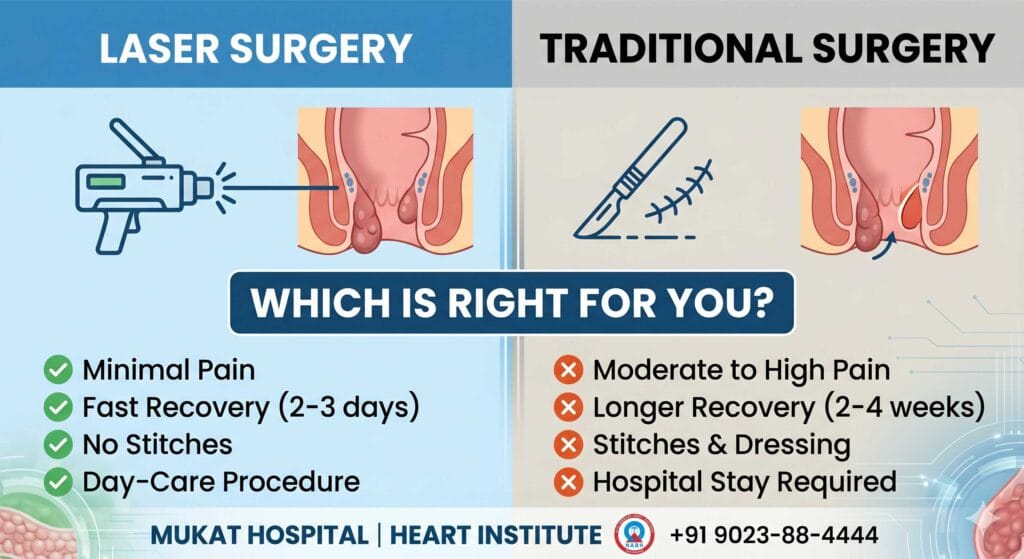
Laser Surgery vs. Traditional Surgery for Piles: Which is Right for You? If you are struggling with the discomfort of hemorrhoids (piles), you are likely looking for a solution that offers the least pain and the fastest recovery. While traditional surgery has been the “gold standard” for decades, Laser Piles Surgery (Laser Hemorrhoidoplasty) has revolutionized how patients in Chandigarh approach treatment.But is the modern approach always better? In this guide, we compare both methods to help you make an informed decision with your piles specialist in Chandigarh. What is Traditional Piles Surgery? Traditional surgery, or Hemorrhoidectomy, involves the physical removal of hemorrhoidal tissue using a scalpel or cautery. Best For: Severe, Grade IV internal piles or large external piles. The Process: Performed under general anesthesia; may require stitches. The Reality: While highly effective at preventing recurrence, it is known for a more intense recovery period. What is Laser Piles Surgery? Laser surgery is a minimally invasive procedure where a controlled laser beam shrinks the hemorrhoidal mass from within. The Process: A thin laser fiber is inserted into the pile; the energy seals the blood vessels, causing the tissue to wither. No Stitches: Since there are no large incisions, no stitches are required. Laser vs. Traditional: Key Comparison Feature Laser Piles Surgery Traditional Surgery Pain Level Minimal (No cuts/wounds) Moderate to High Recovery Time 2–3 Days 2–4 Weeks Hospital Stay Day-care (Same day discharge) 1–2 Days Bleeding Negligible (Laser seals vessels) Negligible (Laser seals vessels) Stitches/Scars None Yes Top 5 Benefits of Laser Piles Surgery If you are searching for the benefits of laser piles surgery, these are the clinical advantages that make it a preferred choice at Mukat Hospital: High Precision: The laser targets only the diseased tissue, leaving healthy surrounding muscle (sphincter) untouched. Bloodless Procedure: The laser “cauterizes” as it works, meaning almost zero blood loss. Lower Infection Risk: No open wounds mean there is a significantly lower chance of post-operative infections. Quick Return to Work: Most of our patients in Chandigarh return to their office or daily routine within 48 to 72 hours. No Post-Op Dressing: Unlike traditional surgery, you won’t need painful daily dressing changes. Which One Should You Choose? The “right” choice depends on the Grade of your Piles: Grade I & II: Often managed with lifestyle changes or laser. Grade III: Ideally suited for Laser surgery for a painless experience. Grade IV (Prolapsed): A piles specialist in Chandigarh might recommend a stapled hemorrhoidopexy or traditional surgery if the piles are too large for laser alone. Why Choose Mukat Hospital for Piles Treatment in Chandigarh? Located in the heart of the city (Sector 34A), Mukat Hospital combines advanced laser technology with the expertise of senior proctologists. We offer: Advanced Diode Laser Technology for maximum safety. Painless Day-care Procedures so you can go home the same day. Transparent Costing and assistance with insurance/TPA. Expert Tip: Don’t wait for the pain to become unbearable. Early-stage piles are much easier to treat with laser than advanced cases. Frequently Asked Questions (FAQ) Is laser piles surgery permanent? Yes. While no surgery can prevent new piles from forming if your diet is poor, the recurrence rate for laser treatment is extremely low when combined with a high-fiber diet. What is the cost of laser piles surgery in Chandigarh? The cost varies based on the grade of piles and insurance coverage. At Mukat Hospital, we provide a detailed cost breakdown during your first consultation. Who is the best piles specialist in Chandigarh? Our surgical team at Mukat Hospital specializes in advanced proctology, offering both laser and minimally invasive stapled surgeries Ready for a Permanent Solution?Stop living with the pain. Book a consultation with a leading piles specialist in Chandigarh today. Book Your Appointment at Mukat Hospital Customer Health Location locationCreated with Sketch Beta. Facebook Twitter Youtube Linkedin Instagram
Best Kidney Specialist in Chandigarh | 7 Superfoods for a Renal Diet

The Renal Diet: 7 Superfoods That Support Kidney Function Your kidneys are the unsung heroes of your body, working 24/7 to filter waste, balance fluids, and regulate blood pressure. However, when kidney function is compromised, your diet becomes your most powerful medicine. At Mukat Hospital (Sector 34A, Chandigarh), our nephrology experts emphasize that a “Renal Diet” isn’t just about what you can’t eat—it’s about fueling your body with the right nutrients to reduce the workload on these vital organs. What is a Renal Diet? A renal-friendly diet is designed to lower the levels of sodium, phosphorous, and potassium in the blood. When kidneys aren’t functioning at 100%, these minerals can build up and cause further damage. If you are looking for the best kidney specialist in Chandigarh or high-quality dialysis services in Sector 34, Mukat Hospital offers personalized nutrition plans tailored to your specific stage of kidney health. 7 Superfoods for Better Kidney Health 1. Cauliflower: The Versatile Low-Potassium Veggie Cauliflower is a nutritional powerhouse for kidney patients. It’s high in Vitamin C, folate, and fiber, but low in potassium. It’s an excellent substitute for potatoes or rice, which are often too high in potassium for a renal diet. 2. Blueberries: Antioxidant Powerhouse Blueberries are among the best sources of antioxidants. They contain anthocyanins, which protect against heart disease and certain cancers. For kidney patients, they are a sweet, low-sodium, and low-phosphorous treat. 3. Red Grapes: Flavonoid-Rich Support Red grapes contain resveratrol, a flavonoid that has been shown to reduce inflammation and protect the kidneys from injury. They are kidney-friendly and help with hydration. 4. Egg Whites: Pure Protein While whole eggs are nutritious, the yolks contain high amounts of phosphorus. Egg whites provide a high-quality, kidney-safe protein source with significantly less phosphorus, making them ideal for people undergoing dialysis treatment. 5. Garlic: The Natural Salt Substitute Reducing salt intake is the first rule of kidney health. Garlic provides a delicious, pungent flavor to dishes without increasing sodium levels. It also has anti-inflammatory and cholesterol-lowering properties. 6. Olive Oil: Healthy Fats Olive oil is a healthy source of fat and is phosphorus-free. It contains oleic acid, which has anti-inflammatory effects. Use it for drizzling over salads or light sautéing to keep your heart and kidneys happy. 7. Cabbage: Loaded with Phytochemicals Cabbage is a cruciferous vegetable that is low in potassium and sodium. It is rich in Vitamin K, Vitamin C, and fiber. Most importantly, it contains phytochemicals that help break up free radicals before they can damage your cells. Comparison Table: Why These Superfoods Win Our facility handles everything from routine diagnostics to complex structural heart repairs. Superfood Key Benefit Why it’s Kidney-Friendly Cauliflower Vitamin C & Fiber Low Potassium substitute Blueberries Antioxidants Low Phosphorus & Sodium Garlic Anti-inflammatory Flavor without the Sodium Olive Oil Healthy Fats Phosphorus-free energy Why Choose Mukat Hospital for Kidney Care? If you or a loved one are managing Chronic Kidney Disease (CKD), seeking kidney stone treatment in Chandigarh, or require emergency renal care, expert intervention is crucial. Mukat Hospital, Sector 34A, is a premier healthcare destination offering: Advanced Dialysis Unit: State-of-the-art machines with stringent infection control. Expert Nephrologists: Renowned doctors specializing in renal failure and hypertension. Comprehensive Diagnostics: Full-scale lab testing for creatinine, urea, and electrolyte balance. 24/7 Emergency Support: Immediate care for acute kidney injury or urological emergencies Important Note: A renal diet is highly individual. Always consult with a top nephrologist in Chandigarh before making significant changes to your intake, especially regarding protein and fluid limits. Contact Mukat Hospital Today For expert consultations or emergency kidney care in Chandigarh, we are here for you. Location: Mukat Hospital, Sector 34A, Chandigarh Emergency Contact No.: +91 9023884444 Trust the best hospital in Chandigarh for your kidney health. Customer Health Location locationCreated with Sketch Beta. Facebook Twitter Youtube Linkedin Instagram
Recognizing Stroke Signs: The Life-Saving Guide
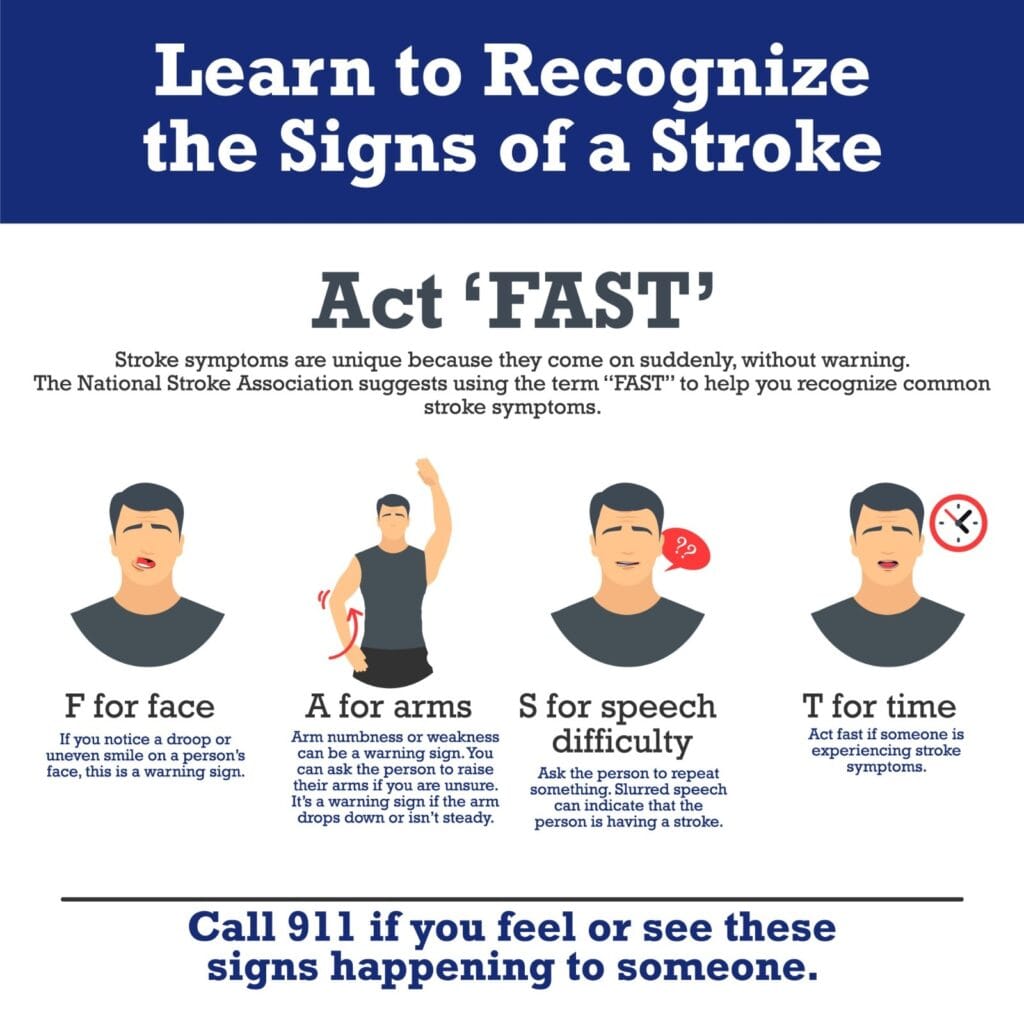
Recognizing Stroke Signs: The Life-Saving Guide When a stroke occurs, every second is a battle for brain health. In the medical world, we say “Time is Brain.” Every minute of delay can lead to the loss of millions of neurons. For the community in Chandigarh, Mohali, and Panchkula, knowing how to react and where to go can make all the difference. At Mukat Hospital, Sector 34A, Chandigarh our neurological emergency unit is designed for one thing: rapid, life-saving intervention How to Identify a Stroke: Think F.A.S.T. The F.A.S.T. acronym is the most effective tool to recognize a stroke in progress. If you notice even one of these signs, don’t wait. F — Face Drooping Ask the person to smile. Does one side of the face hang lower? Is their smile uneven or lopsided? A — Arm Weakness Ask the person to raise both arms. Does one arm drift downward? Is there sudden numbness or weakness in a single limb? S — Speech Difficulty Ask them to repeat a simple phrase like, “I am at Mukat Hospital.” Is their speech slurred, strange, or are they unable to speak at all? T — Time to Call +91 9023884444 If any of these symptoms are present, time is your most valuable resource. Check the clock to see when symptoms started and call our emergency line immediately. Other Sudden Red Flags Beyond F.A.S.T., a stroke can manifest through: Sudden Confusion: Trouble understanding others or disorientation. Vision Problems: Sudden blurriness or loss of vision in one or both eyes. Severe Headache: A sudden, “thunderclap” headache with no obvious cause Loss of Balance: Difficulty walking, dizziness, or loss of coordination Why Mukat Hospital for Stroke Care in Chandigarh? Choosing the right facility is vital for recovery. Mukat Hospital in Sector 34A offers specialized care including: 24/7 Emergency Neurology: Dedicated staff ready for stroke protocols at any hour. Advanced Imaging: On-site CT and MRI to quickly diagnose the type of stroke (Ischemic vs. Hemorrhagic). Thrombolysis Therapy:Time-sensitive “clot-busting” treatments to restore blood flow to the brain. Critical Care Unit (ICU): Specialized post-stroke monitoring to ensure the best possible recovery. The Danger of the “Mini-Stroke” (TIA) Many people ignore symptoms that disappear within a few minutes. These are often Transient Ischemic Attacks (TIAs). While they may pass, they are a serious warning that a major stroke is likely to follow. Always seek an immediate evaluation at a hospital. Act Now: Save Our Emergency Number In an emergency, you don’t want to be searching for a phone number. Save our 24/7 Emergency Contact now: Mukat Hospital Emergency: 📞Call: +91 9023884444 Address: Mukat Hospital, SCO 47-49, Sector 34A, Chandigarh Don’t take a chance with your health or the health of a loved one. Save our emergency number (+91 9023884444) in your phone today. Customer Health Location locationCreated with Sketch Beta. Facebook Twitter Youtube Linkedin Instagram
Advanced Cath Lab Services at Mukat Hospital
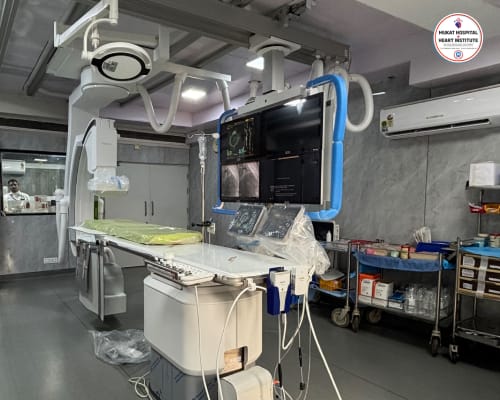
Advanced Cath Lab Services at Mukat Hospital: Leading Cardiac Care in Chandigarh When it comes to cardiac emergencies or chronic heart conditions, the quality of technology is just as vital as the skill of the surgeon. At Mukat Hospital, Chandigarh, our Advanced Cath Lab (Catheterization Laboratory) stands as a beacon of hope, offering precision diagnostics and life-saving interventions 24/7. What is an Advanced Cath Lab? A Cath Lab is a high-tech examination room where interventional cardiologists perform minimally invasive procedures to diagnose and treat cardiovascular disease. Unlike traditional surgery, Cath Lab procedures use small catheters, reducing recovery time and physical trauma. Why Mukat Hospital has the Best Cath Lab in Chandigarh Choosing the right facility for heart care is a life-altering decision. Here is why Mukat Hospital is a preferred destination for cardiac excellence: 1. High-Precision Digital Imaging Our lab is equipped with the latest Flat Panel Detector technology, providing high-resolution, real-time 3D images of the coronary arteries. This allows our doctors to place stents with sub-millimeter accuracy. 2. Low-Dose Radiation Protection Patient safety is our priority. Our advanced systems are designed to use the minimum possible radiation dose required for clear imaging, significantly reducing exposure for both patients and medical staff. 3. Radial Access Specialist Center We specialize in Transradial Access (performing procedures through the wrist). Compared to the traditional femoral (groin) approach, this method offers: Negligible risk of bleeding. Immediate mobility after the procedure. Faster discharge from the hospital. 4. 24/7 Emergency Primary Angioplasty (PPCI) In the event of a heart attack, the “Golden Hour” is critical. Our Cath Lab team is available around the clock to perform Primary Angioplasty, a procedure that opens blocked arteries immediately to minimize heart muscle damage. Cardiac Procedures Offered at Mukat Hospital Our facility handles everything from routine diagnostics to complex structural heart repairs. Procedure Description Description Coronary Angiography Coronary Angiography The gold standard for detecting arterial blockages. Complex Angioplasty (PCI) Using drug-eluting stents to restore blood flow. Using drug-eluting stents to restore blood flow. Pacemaker Implantation Single and dual-chamber devices for heart rhythm management. AICD & CRT-D Advanced implants for heart failure and sudden cardiac arrest prevention. Valvuloplasty Minimally invasive repair of narrowed heart valves. Frequently Asked Questions (FAQs) How long does a Cath Lab procedure take? Most diagnostic procedures (like Angiography) take 15–30 minutes. Interventional procedures (like Angioplasty) usually take 45–90 minutes depending on complexity. Is the procedure painful? No. Procedures are performed under local anesthesia at the entry site (wrist or groin). You may feel a slight pressure, but you will be awake and comfortable throughout. What is the recovery time after Angioplasty? With our radial (wrist) approach, most patients are up and walking within a few hours and are typically discharged the following day. Book Your Cardiac Consultation Today Don’t ignore symptoms like chest pain, breathlessness, or excessive fatigue. Mukat Hospital combines decades of expertise with the most advanced cardiac technology in the region.Contact us today to schedule a heart check-up or consult with our senior cardiologists. Customer Health Location locationCreated with Sketch Beta. Facebook Twitter Youtube Linkedin Instagram


