


Air Quality and Your Lungs
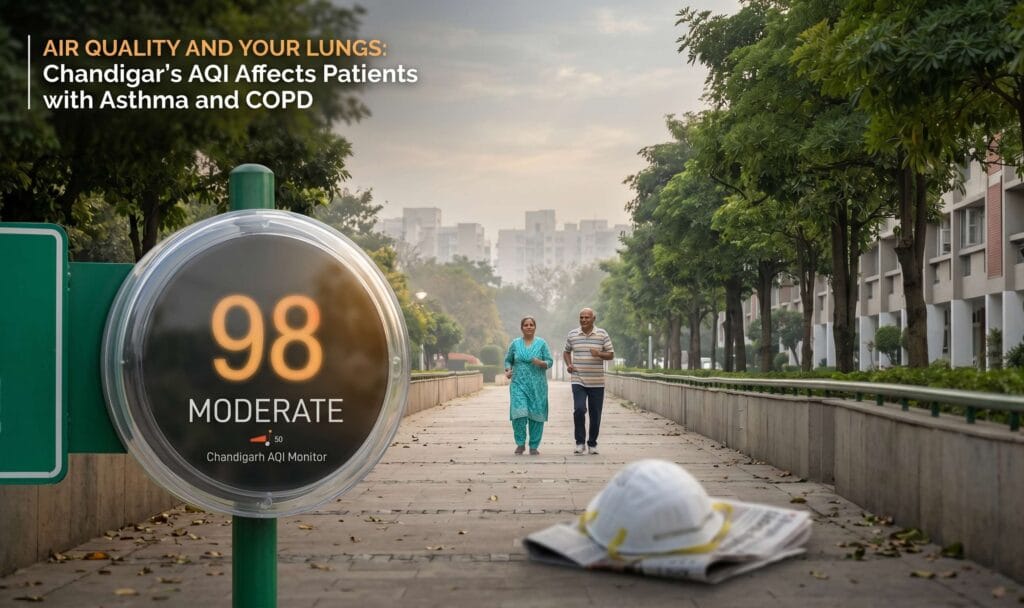
Air Quality and Your Lungs: How Chandigarh’s AQI Affects Patients with Asthma and COPD Chandigarh is often celebrated as “The City Beautiful” for its greenery and planned architecture. However, beneath its manicured exterior, the city faces a recurring challenge: fluctuating Air Quality Index (AQI). For most residents, a “Moderate” AQI day is just a hazy afternoon; but for those living with Asthma or COPD (Chronic Obstructive Pulmonary Disease), it can be a matter of medical emergency As of late April 2026, Chandigarh’s AQI has been hovering in the “Moderate” (51-100) range, with particulate matter (PM2.5 and PM10) remaining the primary pollutants. While this is an improvement over the “Severe” levels seen in winter, it still poses a significant risk to sensitive groups. Understanding the Chandigarh Context: Why AQI Matters The AQI is a yardstick that runs from 0 to 500. The higher the value, the greater the level of air pollution and the greater the health concern. In Chandigarh, the air quality is heavily influenced by: Seasonal Crop Residue Burning: Neighboring states often contribute to a spike in pollutants. Vehicular Emissions: Despite the greenery, the high density of vehicles in sectors like 17, 22, and 35 adds to the NO2 levels. Construction Dust: Ongoing infrastructure projects in the Tricity area (Chandigarh, Mohali, Panchkula) keep PM10 levels elevated. How Pollutants Attack Your Lungs For patients with chronic respiratory conditions, air pollutants act as “triggers” that cause the airways to tighten and inflame. 1.Particulate Matter (PM2.5 & PM10) These are tiny particles—some 30 times thinner than a human hair. Because they are so small, they bypass the nose and throat, traveling deep into the lungs and even entering the bloodstream. Impact: Triggers asthma attacks, causes wheezing, and reduces lung function in COPD patients 2. Nitrogen Dioxide (NO2) & Ozone (O3) Common in urban Chandigarh due to traffic, these gases irritate the lining of the airways. Impact: Increases the risk of respiratory infections and makes the lungs more sensitive to allergens like pollen. Action Plan: Protecting Your Health in Chandigarh If you or a loved one is managing Asthma or COPD, follow these localized steps to stay safe: Check Daily AQI Levels Don’t wait until you feel breathless. Use real-time monitoring tools to check the AQI for specific areas like Sector 22 or the Modern Housing Complex. Pro Tip: If the AQI exceeds 100, limit your outdoor activities, especially in the early morning when pollutants are more concentrated near the ground. Create a “Clean Air Zone” at Home Since we spend 90% of our time indoors, indoor air quality is vital. Keep Windows Closed: During peak traffic hours or high-pollution days. Use Air Purifiers: Ensure they have HEPA filters to trap fine particulate matter. Avoid Indoor Irritants: Refrain from using incense sticks (agarbatti) or strong cleaning chemicals during high-pollution spells. Proper Mask Usage A standard cloth mask will not protect you from PM2.5. If you must go out when the air is “Poor,” use an N95 or N99 respirator mask that fits snugly around your face. Medication Adherence Pollution-related flare-ups can happen suddenly. Ensure you have your rescue inhalers and maintenance medications ready. If you notice an increased need for your “puffer,” consult your pulmonologist immediately. When to See a Doctor At Mukat Hospital, we specialize in managing complex respiratory cases. You should seek medical attention if you experience: Persistent coughing or chest tightness that doesn’t resolve with your usual inhaler. Increased shortness of breath while performing routine tasks. A change in the color or thickness of mucus. Final Thoughts Chandigarh’s air quality is a shared responsibility, but your health is a personal priority. By staying informed and taking proactive measures, you can breathe easier despite the changing AQI. Book a consultation with the best pulmonologist in Chandigarh today. Book Your Appointment at Mukat Hospital Customer Health Location locationCreated with Sketch Beta. Facebook Twitter Youtube Linkedin Instagram
Is Summer Making Your COPD Worse? Here’s What You Need to Know

Is Summer Making Your COPD Worse? Here’s What You Need to Know Living with Chronic Obstructive Pulmonary Disease (COPD) requires year-round care, but the summer season can bring specific challenges for those affected. With rising temperatures, increased humidity, and higher levels of air pollutants, many COPD patients notice their symptoms getting worse during this time of year.If you or a loved one is dealing with COPD, it’s important to understand how the summer climate impacts lung health and what steps can be taken to manage the condition effectively. Why Do COPD Symptoms Worsen in Summer? Although winter is commonly associated with breathing problems, summer brings its own triggers for people with chronic respiratory conditions. Here’s why the warmer months may affect COPD more than expected: 1. Excessive Heat and HumidityWhen the weather is hot and humid, it can make the air feel thick and heavy. This puts extra pressure on the lungs, especially in individuals already struggling with airflow obstruction, leading to shortness of breath and fatigue. 2. Pollution and OzoneWarmer weather can contribute to higher levels of pollution. Sunlight reacts with pollutants to form ground-level ozone, a common irritant for people with lung diseases. Increased vehicle emissions and dust in the air can also worsen COPD symptoms. 3. Risk of DehydrationThe body loses more fluids in the summer due to sweating. Dehydration can cause mucus in the lungs to become thick and sticky, making it difficult to clear the airways and leading to coughing and wheezing. 4. Seasonal AllergensPollens, dust, and other airborne allergens continue to circulate in summer. These can act as triggers for respiratory issues, particularly for people who have both COPD and allergic conditions like asthma. Common Signs of a Summer Flare-Up It’s important to monitor any changes in your breathing pattern or overall health. Look out for: Feeling unusually short of breath A noticeable increase in coughing or mucus Changes in the color or thickness of mucus Wheezing or tightness in the chest Swollen legs or ankles Fatigue or trouble sleeping due to breathing discomfort If these symptoms become more frequent or severe, don’t delay seeking medical advice. Helpful Tips to Stay Comfortable During Summer You can reduce the impact of heat on your condition with a few lifestyle changes. Our pulmonologists at Mukat Hospital recommend the following: 1. Stay Indoors During Peak HeatTry to limit outdoor activities between 10 AM and 4 PM when the sun is at its strongest. If you must step outside, wear light clothing and carry your inhaler with you. 2. Stay HydratedMake sure to drink enough water throughout the day. Proper hydration keeps mucus thin, helping your lungs function more efficiently. Avoid alcohol and caffeine as they can dehydrate you. 3. Keep Track of Air QualityCheck the Air Quality Index (AQI) using weather apps or local updates. Poor air quality can make breathing more difficult, so it’s best to stay indoors on days when pollution is high. 4. Stick to Your MedicationsNever skip your prescribed treatments. Take your inhalers and medications on time, and make sure you have an emergency inhaler with you at all times. 5. Eat Light and Balanced MealsLarge meals can press against your diaphragm and make breathing more difficult. Eat smaller meals throughout the day and focus on fruits, vegetables, and foods rich in healthy fats. 6. Avoid Strenuous ActivitiesPhysical exertion during the heat can increase breathlessness. Choose gentle indoor exercises like stretching or light yoga and avoid overexerting yourself. 7. Wear MaskYou should wear a mask or scarf on high pollution or high allergen days. When to Seek Medical Help Don’t wait until symptoms become severe. Contact a healthcare provider if you: Experience extreme shortness of breath, even while resting Notice a bluish tint to lips or nails Have trouble speaking full sentences Feel dizzy, confused, or extremely tired See blood in your mucus Have a high fever along with breathing problems These signs could indicate a medical emergency or a severe COPD flare-up that requires immediate treatment. Comprehensive COPD Care at Mukat Hospital, Chandigarh Mukat Hospital offers complete care for patients with chronic respiratory issues. Our Pulmonology Department is staffed with experienced doctors and trained support teams to ensure you get the best possible treatment. Our services include: Detailed lung assessments including spirometry Tailored COPD management plans Pulmonary rehabilitation and breathing therapy Emergency care for acute episodes Oxygen therapy and nebulization support Why Mukat Hospital is the Right Choice Expert pulmonologists with years of experience Round-the-clock ICU and emergency facilities Patient-focused care in a clean, comfortable environment Located conveniently in the heart of Chandigarh (Sector 34A) Compassionate staff and personalized treatment approach Take Charge of Your Lung Health This Summer COPD doesn’t have to limit your life—even during hot weather. With the right precautions, healthy routines, and timely medical attention, you can manage your symptoms and avoid flare-ups. If you’re noticing changes in your breathing or want to consult a lung specialist, don’t wait. Reach out to us today. Customer Health Location locationCreated with Sketch Beta. Facebook Twitter Youtube Linkedin Instagram
Finding the Right Asthma Specialist in Chandigarh

Finding the Right Asthma Specialist in Chandigarh: Mukat Hospital’s Commitment to Respiratory Health Living with asthma can be challenging, but with the right support and care, you can enjoy an active, fulfilling life. Mukat Hospital in Chandigarh provides specialized care for asthma, focusing on helping patients effectively manage their symptoms. If you’re searching for a reliable asthma specialist in Chandigarh, here’s how Mukat Hospital can meet your needs. Understanding Asthma and Its Effects Asthma is a long-term respiratory condition that inflames and narrows the airways, resulting in symptoms like wheezing, coughing, shortness of breath, and chest tightness. While asthma has no cure, its symptoms can be controlled with the proper treatment plan. Managing asthma well can make a tremendous difference in quality of life, and Mukat Hospital’s specialists are here to help you achieve just that. Mukat Hospital’s Expert Asthma Care Team Mukat Hospital has a dedicated team who focus on asthma management. Led by professionals such as Dr. Komal Chaudhary, Consultant Pulmnologist, who works closely with each patient to understand their specific symptoms, triggers, and lifestyle. This individualized approach ensures that every patient receives the right treatment to control their asthma and reduce symptoms. Comprehensive Asthma Care Our asthma specialists follow a holistic approach to asthma care, which includes: Thorough Diagnosis: To create an effective treatment plan, our specialists conduct in-depth assessments, including lung function and allergy testing, to understand the root causes and severity of each patient’s asthma. Personalized Treatment Plans: After evaluating the patient’s condition, our specialists craft a customized treatment plan, often involving a combination of inhalers, medications, breathing exercises, and lifestyle modifications. Patient Education: Education is a cornerstone of asthma management. Mukat Hospital’s specialists provide valuable guidance on avoiding asthma triggers, properly using inhalers, and recognizing early warning signs of an asthma episode. Ongoing Monitoring and Follow-Up: Asthma requires continuous monitoring. Our specialists schedule regular follow-ups to track each patient’s progress and adjust treatments as necessary, ensuring optimal long-term care. State-of-the-Art Facilities for Advanced Asthma Treatment Mukat Hospital is equipped with the latest diagnostic technology, allowing for precise assessments and effective treatment options. Our facilities and equipment help our asthma specialists deliver high-quality care that reduces the frequency and intensity of asthma symptoms, allowing patients to lead more active, comfortable lives. Why Choose Mukat Hospital in Chandigarh for Asthma Management? Experienced Specialists: Mukat Hospital’s asthma specialists have extensive experience managing asthma and other respiratory issues, providing patients with top-level care. Patient-Centered Approach: Our specialists emphasize compassionate care, creating a supportive environment for patients to learn about and manage their asthma confidently. Modern Technology: With advanced technology and diagnostic tools, Mukat Hospital provides a cutting-edge approach to asthma treatment tailored to each individual. Schedule a Consultation with an Asthma Specialist in Chandigarh If asthma is impacting your life, it may be time to consult with one of Mukat Hospital’s skilled asthma specialists. With our comprehensive and compassionate care, Mukat Hospital can help you manage your symptoms and improve your respiratory health. Contact Mukat Hospital today to book an appointment with an asthma specialist and take a positive step toward a healthier, more active life. Customer Health Location locationCreated with Sketch Beta. Facebook Twitter Youtube Linkedin Instagram


