


Beat the Heat: A Comprehensive Guide to Heart & Summer Safety in the Tricity
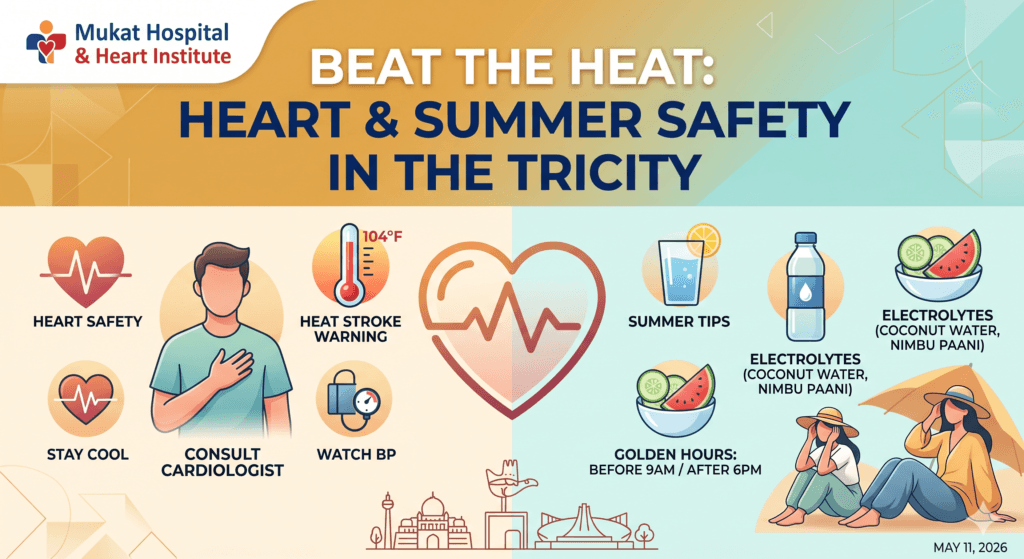
Considering the current date (May 2026) and the typical health concerns for the Chandigarh/Tricity area this time of year, here is a comprehensive blog post drafted for the Mukat Hospital & Heart Institute website. Beat the Heat: A Comprehensive Guide to Heart & Summer Safety in the Tricity As temperatures in Chandigarh and the surrounding areas begin to soar, the heat is more than just a matter of discomfort—it’s a matter of health. For the residents of our beautiful Tricity, staying cool is essential, especially for those managing chronic conditions like hypertension or heart disease. At Mukat Hospital & Heart Institute, we believe that prevention is the first step toward a healthy life. Here is everything you need to know about staying safe during a North Indian summer. Why the Heat is Hard on Your Heart When it’s hot, your heart has to work harder. To cool you down, your body shunts more blood to your skin, which requires your heart to beat faster and pump harder. For individuals with existing cardiac conditions, this extra “overtime” can lead to strain. Watch for these signs: Increased palpitations, shortness of breath, or unusual fatigue during light activity. The Mukat Tip: If you are on blood pressure medication or diuretics, consult your cardiologist. Heat can cause blood pressure to dip, and your dosage may need a seasonal adjustment. Hydration: Beyond Just Water In the dry heat of Chandigarh, you lose fluids through perspiration often without realizing it. Thirst is actually a late sign of dehydration. The 2-Liter Rule: Aim for at least 2-3 liters of water daily. Natural Electrolytes: Include coconut water, buttermilk (lassi), and lemon water (nimbu paani) with a pinch of salt to replace lost minerals. Avoid: Excessive caffeine and sugary sodas, as they can actually increase fluid loss. 3. Recognizing Heat Exhaustion vs. Heat Stroke It is vital to know when a “bad headache” is actually a medical emergency. Symptom Symptom Heat Exhaustion Heat Stroke (Emergency!) Symptom Heat Exhaustion Heat Stroke (Emergency!) Skin Skin Pale, cool, and clammy Hot, red, and dry (no sweat) Skin Pale, cool, and clammy Hot, red, and dry (no sweat) Pulse Fast and weak Rapid and strong Mental State Dizziness or fainting Confusion, slurred speech, or seizures Temperature Temperature Normal or slightly elevated Above 104°F (40°C) If you suspect Heat Stroke, call our 24/7 Emergency Line immediately. 4. Lifestyle Tweaks for Tricity Residents The Golden Hours: Limit outdoor activities (walking, errands, or gardening) to before 9:00 AM or after 6:00 PM. Dress for the Climate: Opt for loose-fitting, light-colored cotton fabrics that allow your skin to breathe. Summer Diet: Switch to “water-heavy” foods. Watermelon, cucumbers, and curd should be staples in your kitchen this month. 5. A Note for Our Seniors Our elderly population is more susceptible to heat-related illnesses as the body’s ability to regulate temperature decreases with age. We encourage family members to check on seniors at least twice a day during peak heatwaves. Comprehensive Care at Mukat Hospital Whether it’s a routine cardiac check-up or an emergency consultation, Mukat Hospital is equipped with state-of-the-art diagnostic tools and a team of seasoned specialists ready to assist you. Specialties Available: Cardiology, Internal Medicine, Orthopedics, Nephrology, and more. Location: Sector 34-A, Chandigarh. Emergency Contact: +91 9023884444 Stay Cool. Stay Hydrated. Stay Healthy. Customer Health Location locationCreated with Sketch Beta. Facebook Twitter Youtube Linkedin Instagram


