


Heart Disease in women

Heart Disease in Women: Recognizing the Unique Risks & Subtle Warning Signs When most people picture a heart attack, they imagine a sudden, crushing chest pain that knocks someone off their feet. However, medical research—and daily clinical experience—tells a very different story when it comes to women. Heart disease is the leading cause of death among women globally, yet women are significantly more likely than men to misinterpret their symptoms or delay seeking emergency medical care. At Mukat Hospital, Chandigarh, our Department of Cardiac Sciences sees many female patients who brushed off early warning signs as mere fatigue, acidity, or stress. Increasing awareness around women’s heart health can save lives. Here is what every woman—and her family—in the Tricity region (Chandigarh, Mohali, Panchkula) should know. Why Heart Disease Manifests Differently in Women Men and women have distinct cardiovascular systems and hormonal profiles. While men typically experience major arterial blockages in large coronary blood vessels, women are more prone to Coronary Microvascular Disease (CMD)—a condition affecting the heart’s tiny blood vessels. This key difference often results in symptoms that do not fit the classic “movie-style” heart attack profile, making diagnosis more complex without specialized cardiac screening. Take charge of your health. Book your heart health check-up at a trusted hospital in Chandigarh today. Call Now +91 9023884444 Customer Health Location locationCreated with Sketch Beta. Facebook Twitter Youtube Linkedin Instagram Classic vs. Subtle: Symptoms of Heart Attack in Females While chest discomfort remains a common indicator, women frequently experience atypical or subtle warning signs—often without severe chest pain. Uncommon & Subtle Symptoms to Watch Out For: Unusual or Extreme Fatigue: Feeling completely exhausted after routine daily activities, lasting for days or weeks. Shortness of Breath: Difficulty breathing while resting or during light physical activity, with or without chest tightness. Referred Pain: Pain, aching, or tightness spreading to the neck, jaw, throat, upper back, shoulders, or arms. Upper Abdominal Discomfort: Indigestion-like burning, nausea, vomiting, or stomach pressure (frequently mistaken for acidity/GERD). Cold Sweats & Lightheadedness: Sudden unexplained sweating, dizziness, or feeling faint. Sleep Disturbances & Anxiety: Unexplained restlessness, difficulty sleeping, or a sudden sense of impending doom. Crucial Tip: In women, heart symptoms can manifest while resting or sleeping, and are often triggered by emotional stress rather than physical exertion. If something feels “off,” do not hesitate to seek immediate medical assistance. Actionable Steps to Protect Your Heart: Women share standard risk factors with men—such as high blood pressure, high cholesterol, obesity, and smoking. However, certain conditions significantly elevate heart risk specifically in women: 1. Hormonal Changes & Menopause Estrogen provides a natural protective effect on blood vessel walls. As estrogen levels drop during and after menopause, the risk of developing coronary artery disease rises sharply. 2. Pregnancy Complications A history of preeclampsia (high blood pressure during pregnancy), gestational diabetes, or premature delivery increases a woman’s long-term risk of heart disease later in life. 3. Autoimmune Disorders Conditions like lupus and rheumatoid arthritis affect women far more frequently than men and cause chronic systemic inflammation, accelerating plaque buildup in the arteries. 4. Diabetes and Stress Diabetes increases the risk of heart disease more significantly in women than in men. Additionally, emotional stress, depression, and high anxiety levels have a stronger physiological impact on a woman’s cardiovascular system. Wondering about your risks? Schedule a personalized consultation at a leading brain tumor hospital in Chandigarh. Diagnostic Challenges: Why Early Screening Matters Because female symptoms are subtle and microvascular disease does not always show up on standard tests, specialized cardiac evaluation is essential. At Mukat Hospital, Chandigarh, our advanced cardiology clinic utilizes comprehensive diagnostic tools tailored for women’s heart care: Electrocardiogram (ECG) & Echocardiogram (ECHO): To monitor heart rhythm and structure. Treadmill Stress Testing (TMT): To assess how the heart performs under physical effort. High-Sensitivity Cardiac Blood Tests: Checking for specific biomarkers, lipid levels, and blood sugar control. Coronary Angiography & CT Angiogram: Providing detailed visual imaging of coronary arteries. Explore treatment options with confidence. Connect with the care team at Mukat Hospital, Chandigarh today. Unique Risk Factors for Women’s Heart Health: Prevention is the most effective approach to cardiovascular health. Women of all ages can take immediate steps to reduce their risk: Know Your Numbers: Monitor your blood pressure, blood sugar, lipid panel, and BMI regularly—especially after age 35 or post-menopause. Adopt a Heart-Healthy Diet: Focus on whole grains, leafy greens, lean proteins, nuts, and healthy fats while reducing sodium, refined sugars, and trans fats. Stay Active: Aim for at least 150 minutes of moderate aerobic exercise (like brisk walking, cycling, or swimming) per week. Manage Stress: Practice mindfulness, yoga, or deep breathing to mitigate the cardiovascular impact of chronic mental stress. Schedule Annual Cardiac Screenings: Routine preventive heart checkups can catch subtle warning signs before they escalate into emergencies. Take Control of Your Brain Health Today Take the first step toward a healthier life. Book an Appointment Today: Call us at 9023-88-4444 or visit the Mukat Hospital to schedule your consultation.
The Future of Cardiac Care: Sutureless Heart Surgery vs. Traditional Open Heart Surgery
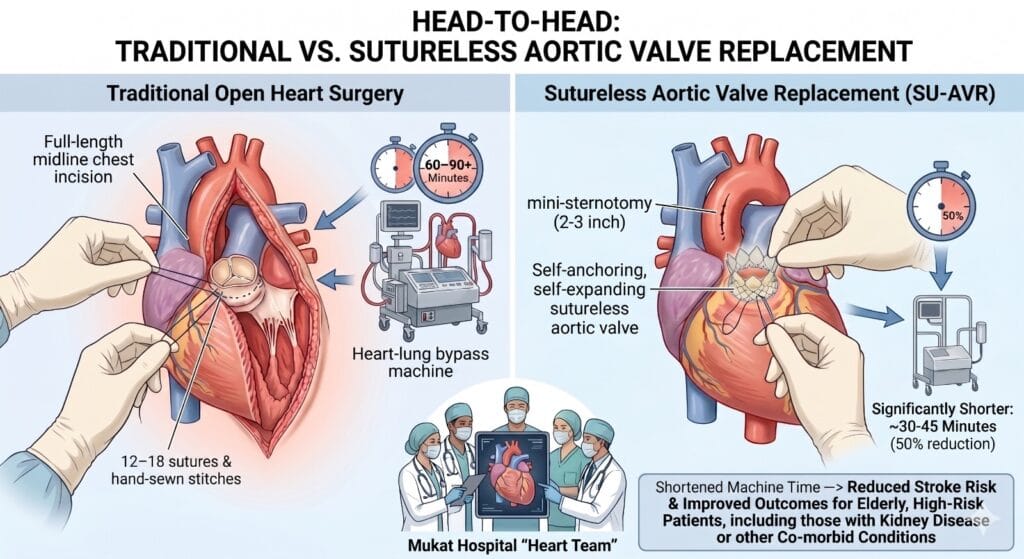
The Future of Cardiac Care: Sutureless Heart Surgery vs. Traditional Open Heart Surgery What is Traditional Open Heart Surgery? In a traditional aortic valve replacement (AVR), the cardiac surgeon makes an incision down the chest, carefully separates the breastbone to access the heart, and connects the patient to a heart-lung bypass machine. Once the damaged natural valve is removed, the surgeon must meticulously hand-sew the new artificial valve into place using tiny stitches called sutures. A standard valve replacement typically requires 12 to 18 individual sutures, a precise process that takes significant time while the heart is stopped. What is Sutureless Heart Surgery? Sutureless heart surgery utilizes a highly advanced, self-expanding or anchoring artificial valve. Instead of manually stitching the new valve into place, the surgeon removes the diseased valve and positions the new sutureless valve inside the heart. Once deployed, the valve expands and anchors itself securely against the tissue under natural pressure. The surgeon may use just one or two securing stitches for absolute stability, but the process completely eliminates the need for dozens of time-consuming hand-sewn knots. Head-to-Head: How They Compare Feature Traditional Open Heart Surgery Sutureless Heart Surgery Fixation Method 12–18 hand-sewn stitches (sutures) Self-anchoring, expanding framework Time on Bypass Machine Longer (typically 60–90+ minutes) Significantly shorter (often reduced by less time, 50%) Incision Options Requires a full midline chest incision Can be done via a tiny, minimally invasive incision (mini-sternotomy) Recovery Time 6 to 8 weeks for complete healing 2 to 4 weeks with less post-op discomfort Ideal For Standard patients with no complex anatomy, younger age group High-risk, elderly, or multi-procedure patients The Big Win: Why “Less Time on the Machine” Matters The single greatest advantage of sutureless heart surgery comes down to a clock. During a valve replacement, the patient relies on a heart-lung bypass machine while the heart is temporarily stopped (called cross-clamp time). Because a sutureless valve can be anchored in just a few minutes rather than hand-stitched over half an hour, the overall time the patient spends on the bypass machine is significantly less. For elderly patients, or those with other health conditions like kidney disease (creatinine) or any other co-morbid condition, minimizing bypass time drastically reduces the risk of post-operative complications, stroke, and inflammation, and other complications. Key Benefits of the Sutureless Approach: Minimally Invasive: Because the valve is easier to position, surgeons can often place it through a tiny 2-to-3 inch incision between the ribs, leaving the breastbone completely intact. Rapid Recovery: Less time in the operating room means less time in the ICU, fewer days in the hospital, and a much quicker return to daily life in Chandigarh. Excellent Fluid Dynamics: Sutureless valves do not have a bulky sewing ring, allowing for better blood flow through the newly installed valve. Which Option is Right for You? While sutureless surgery sounds like the obvious choice, it is not a one-size-fits-all solution. Traditional open-heart surgery remains vital for patients with highly complex heart anatomy or those needing multiple complex repairs at once. At Mukat Hospital, our multidisciplinary “Heart Team” evaluates every patient individually. Factors such as age, overall physical fitness, anatomical variations, including different valve anatomies, help us determine which pathway offers the safest, most successful outcome. Considering Cardiac Care? If you or a loved one have been advised to undergo valve surgery, get an expert opinion from the leading cardiac specialists in the Tricity. Sutureless vs Open Heart Surgery Location: Mukat Hospital, Sector 34-A, Chandigarh. 24/7 Emergency & Consultations: +91 90238-84444 Customer Health Location locationCreated with Sketch Beta. Facebook Twitter Youtube Linkedin Instagram
Understanding Heart Attacks: Symptoms, Causes, and Treatment
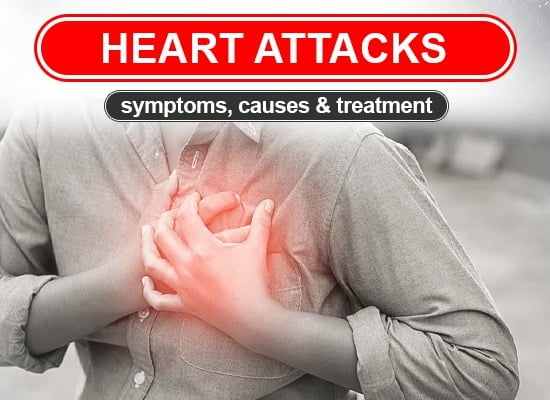
Understanding Heart Attacks: Symptoms, Causes, and Treatment In today’s modern world, heart attacks have emerged as a prevalent health concern, impacting millions of individuals globally. The increasing incidence of heart attacks underscores the critical need for understanding this life-threatening condition, including its symptoms, causes, and treatment options. At Mukat Hospital, we emphasize the importance of education and awareness in combating heart disease. In this article, we delve into the intricacies of heart attacks to equip you with knowledge and empower you to safeguard your heart health effectively. Understanding Heart Attacks: A heart attack, clinically referred to as a myocardial infarction, occurs when the blood flow to a section of the heart muscle is obstructed, resulting in the deprivation of oxygen-rich blood. This blockage typically stems from the accumulation of plaque in the coronary arteries, which are responsible for supplying blood to the heart. Without timely medical intervention, a heart attack can lead to substantial damage to the heart muscle and, in severe cases, prove fatal. Recognizing Symptoms: Identifying the symptoms of a heart attack is paramount for prompt intervention and minimizing potential damage. While symptoms may vary among individuals, common warning signs include: Chest Discomfort: This often manifests as pressure, squeezing, fullness, or pain in the center of the chest, with potential radiation to the arms, back, neck, jaw, or stomach. Shortness of Breath: Individuals may experience difficulty breathing or a sensation of being unable to catch their breath, often accompanied by chest discomfort. Gastrointestinal Symptoms: Some individuals may report nausea, indigestion, or vomiting, resembling stomach discomfort. Cold Sweats: Profuse sweating, often accompanied by a sense of impending doom, can occur. Fatigue: Unexplained fatigue, weakness, or lightheadedness, particularly prevalent in women, may signal a heart attack. It’s essential to note that not all heart attacks present with sudden, intense symptoms. Silent heart attacks, characterized by subtle or no symptoms, are also prevalent, particularly in individuals with diabetes or older adults. Therefore, any unusual discomfort or symptoms should not be dismissed, and immediate medical attention should be sought. Exploring Causes: Numerous factors contribute to the development of heart attacks, including: Atherosclerosis: The gradual buildup of plaque, consisting of cholesterol, fat, and other substances, within the coronary arteries narrows the vessels, impeding blood flow to the heart. Hypertension: High blood pressure imposes additional strain on the heart and arteries, heightening the risk of a heart attack. Hypercholesterolemia: Elevated levels of LDL cholesterol (“bad” cholesterol) foster plaque accumulation within the arteries. Smoking: Tobacco smoke damages blood vessels, accelerates plaque formation, and diminishes oxygen delivery to the heart. Diabetes: Individuals with diabetes face an elevated risk of heart disease due to elevated blood sugar levels and associated metabolic abnormalities. Obesity and Sedentary Lifestyle: Excess weight and physical inactivity contribute to various cardiovascular risk factors, including hypertension, diabetes, and hypercholesterolemia. Genetic Predisposition: A family history of heart disease amplifies the likelihood of developing cardiovascular complications. Treatment Options: Timely intervention is imperative for mitigating heart muscle damage and enhancing outcomes. Treatment modalities for heart attacks encompass: Medications: Thrombolytic agents or clot-dissolving medications may be administered to restore blood flow by dissolving blood clots. Additionally, medications such as aspirin, beta-blockers, ACE inhibitors, or statins may be prescribed to manage symptoms and reduce the risk of recurrent cardiac events. Coronary Angioplasty and Stenting: The procedure known as coronary angioplasty and stenting is a sophisticated yet minimally invasive approach aimed at addressing coronary artery blockages. This process begins with the insertion of a thin, flexible catheter into the affected artery, guided by advanced imaging techniques. Upon reaching the blockage site, a small balloon attached to the catheter is inflated, exerting pressure against the plaque buildup and effectively widening the narrowed artery. This action restores blood flow to the heart muscle, alleviating symptoms and reducing the risk of further complications. Following the balloon angioplasty, a stent, mesh-like metal tube is carefully positioned within the newly widened artery. The stent serves to maintain the patency of the artery, preventing its re-narrowing and ensuring unobstructed blood flow to the heart. Some stents may be coated with medication (known as drug-eluting stents) to discourage the recurrence of plaque formation and promote long-term arterial health. Compared to traditional surgical approaches, coronary angioplasty and stenting offer numerous benefits, including shorter recovery times, reduced risk of complications, and improved patient comfort. Coronary Artery Bypass Surgery: Coronary artery bypass surgery, also referred to as bypass grafting, is a surgical intervention employed to address extensive arterial blockages hindering adequate blood supply to the heart. This procedure aims to establish alternative blood pathways that bypass the obstructed arteries and restore optimal blood flow to the heart muscle. During the surgery, a healthy blood vessel typically harvested from the patient’s leg, arm, or chest wall is utilized as a graft. Subsequently, the surgeon meticulously attaches the graft to the coronary artery, creating a bypass route that enables blood to circumvent the blocked segment of the artery. By establishing these new conduits, bypass surgery ensures the unimpeded delivery of oxygen-rich blood to the heart muscle, thereby reducing the risk of myocardial damage and alleviating symptoms such as chest pain (angina). While coronary artery bypass surgery is more invasive than angioplasty, it remains a crucial treatment option for individuals with severe arterial blockages or those unsuitable for less invasive interventions. Lifestyle Modifications: Adopting a heart-healthy lifestyle is paramount for preventing recurrent heart attacks and managing underlying risk factors. Lifestyle modifications encompass smoking cessation, weight management, adherence to a balanced diet low in saturated fats and cholesterol, regular physical activity, stress management, and diligent control of blood pressure and cholesterol levels. Conclusion: Heart attacks represent a significant medical emergency necessitating immediate attention. By familiarizing yourself with the symptoms, causes, and treatment options associated with heart attacks, you can proactively safeguard your heart health and reduce the likelihood of experiencing a cardiac event. Prevention remains the cornerstone of cardiovascular health, underscoring the importance of embracing a heart-healthy lifestyle. At Mukat Hospital, we are dedicated to providing comprehensive cardiac care, empowering individuals to lead


